Why Choose an Artificial Orchid Plant for Global Sourcing?

Time:2026-10-01 Author:Sophia
0%

Why Choose an Artificial Orchid Plant for Global Sourcing?

Global buyers are rethinking decorative greenery. The artificial flowers market was valued at approximately USD 1.58 billion in 2023, according to Fortune Business Insights. Its forecast suggests steady growth through 2032. Grand View Research also identifies hospitality, retail, and residential interiors as important demand sectors. These figures show opportunity, but they do not guarantee a successful product. Quality still decides repeat orders.

Artificial-flower specialist Jennifer McGarigle, founder of Floral Interiors, has said, “The best faux flowers are judged by their realism, not their permanence.” That principle matters when sourcing an Artificial Orchid Plant. Buyers should inspect petal gradients, stem flexibility, leaf texture, pot stability, and color consistency under natural light. A convincing orchid should feel carefully made, not merely mass-produced. Some suppliers offer UV-resistant materials, recyclable packaging, and custom pot designs. Others focus only on low prices. That difference becomes visible beside a hotel reception desk or a showroom window.

Global sourcing also offers practical advantages. Artificial orchids require no irrigation, seasonal replacement, or controlled indoor climate. They can reduce maintenance costs in offices, restaurants, and serviced apartments. Yet buyers should examine shipping protection, material declarations, sample approval, and batch consistency. Sustainability claims need evidence. I may be too optimistic here: synthetic materials still create environmental questions. A responsible sourcing decision therefore compares durability, packaging, freight efficiency, and end-of-life options. The strongest Artificial Orchid Plant is not simply beautiful. It is reliable, scalable, and honestly specified.
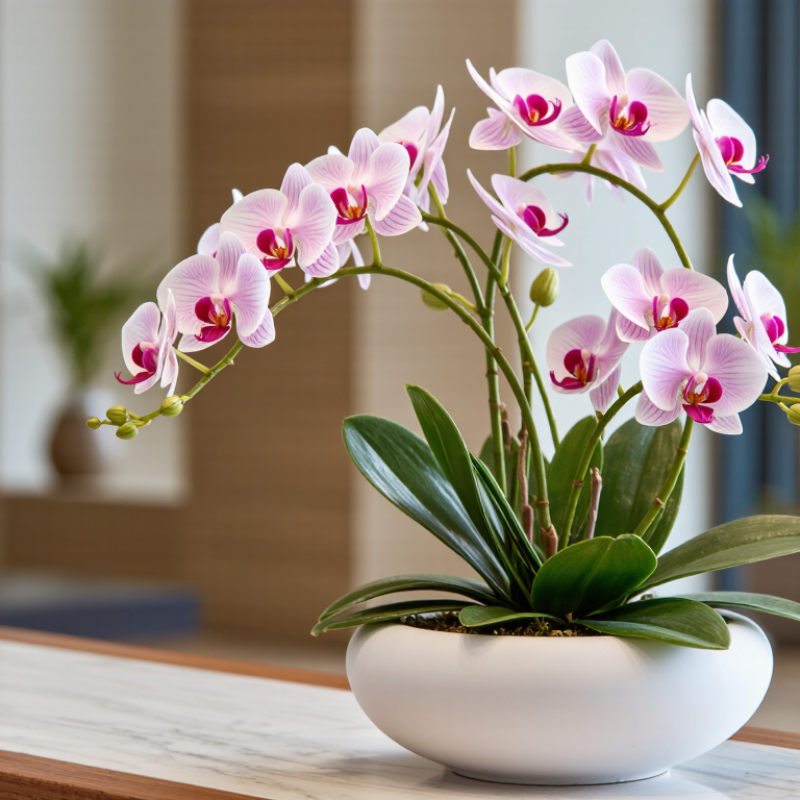
Why Choose an Artificial Orchid Plant for Global Sourcing?

Artificial Orchid Plants: Definition and Main Product Types

Artificial orchid plants are manufactured replicas of orchid flowers, leaves, stems, and roots.

They are designed to provide a natural display without watering, sunlight, or seasonal maintenance. Common materials include polyester fabric, PVC, polyethylene, latex, and flexible wire. Material choice affects softness, color depth, durability, and shipping weight.

The main product types include potted orchids, loose flower stems, hanging orchids, tabletop arrangements, and orchid wreaths. Potted models usually combine flowers, leaves, roots, moss, and a ceramic, plastic, or cement-style container. Loose stems suit hotels, retailers, event decorators, and interior projects requiring custom arrangements. Hanging types work well in tall spaces, while compact pots fit desks and shelves. For global sourcing, buyers should compare dimensions, carton packing, flower count, pot finish, and color consistency.

Practical inspection matters. Check whether petals recover after compression and whether stems hold their position. Look closely at leaf edges, glue marks, surface dust, and unpleasant odors.

A sample should survive repeated handling before bulk ordering. Product photos can hide uneven coloring.

No option is perfect. Some fabric flowers look softer but collect dust, while plastic petals may clean easily but appear less realistic. I would also request material details and care instructions in writing, because small misunderstandings can affect an entire shipment.

Key Benefits for International Buyers and Commercial Spaces

For international buyers, an artificial orchid plant offers practical value beyond decoration. It creates a polished reception desk, hotel lobby, or restaurant corner without demanding sunlight or daily watering. Commercial spaces can maintain a consistent appearance across multiple locations. That matters when local climate and maintenance skills vary.

Sourcing teams should inspect materials, color accuracy, stem flexibility, and pot stability before placing large orders. A sample reveals details that product photos often hide. Look closely at leaf texture. Cheap leaves may appear overly glossy under strong indoor lighting. UV-resistant materials can support covered outdoor use, but buyers should verify the stated performance through supplier test reports. Fire-safety requirements also differ by destination, so compliance documents deserve careful review. Some suppliers provide useful records. Others offer vague promises.

For international shipping, nested packaging can reduce carton volume and protect delicate petals. Buyers should confirm carton dimensions, gross weight, replacement policies, and lead times early. A neutral pot design may suit several markets, while custom colors can strengthen a commercial interior scheme. However, customization usually increases minimum order quantities and production risk. That trade-off needs honest calculation.

In my sourcing reviews, the most reliable results come from approved samples, clear inspection standards, and realistic delivery windows. Artificial orchids still need occasional dusting. They are low-maintenance, not maintenance-free.

Materials, Craftsmanship, and Quality Standards to Evaluate

Why Choose an Artificial Orchid Plant for Global Sourcing?

Materials and workmanship determine whether an artificial orchid looks convincing after shipping. Polyester petals should feel flexible, not papery or brittle. High-quality petals show gentle color variation, soft edges, and realistic veins. Polyethylene leaves usually offer better shape retention than thin plastic sheets. Stems need an internal wire with firm wrapping. They should bend without exposing metal.

During sample inspections, I check the flower head from different angles. Uneven glue marks, loose petals, and visible seams often reveal rushed assembly. A natural-looking orchid should have varied blooms, balanced spacing, and a stable pot base. Small details matter. Still, perfection can be misleading. Excessively uniform flowers may look artificial under bright retail lighting.

For global sourcing, request material specifications and recent third-party test reports. Confirm restricted-substance compliance for the destination market. Check colorfastness, odor, breakage resistance, and packaging performance. Drop testing can reveal whether stems survive ordinary handling. A quality-control plan should define acceptable limits for crooked stems, paint defects, and missing leaves. Factory audits can verify these standards, but reports alone are not enough. Inspect production samples before shipment. Compare them with the approved reference sample. Humidity, heat, and long transport may change the product. That risk deserves testing, not assumptions.

Global Sourcing Factors: Cost, Supply, Customization, and Logistics

Why Choose an Artificial Orchid Plant for Global Sourcing?

Cost, supply stability, customization, and logistics shape every artificial orchid purchase. Grand View Research estimates that the global artificial flowers market reached about USD 1.6 billion in 2023. The report also projects steady growth through 2030. This supports long-term sourcing, but low prices can hide weak materials, uneven coloring, or fragile stems. Buyers should compare landed cost, not factory price alone. Include molds, packaging, inspection, duties, and inland delivery.

Supply planning matters. Polyester petals, plastic stems, and wire cores may come from different production regions. A supplier with multiple material channels can reduce delays. Yet, more suppliers do not always mean better control. I have seen small color differences become serious problems across a large hotel order. Request pre-production samples, batch photos, and a written tolerance range. The International Maritime Organization and UNCTAD continue to report pressure on shipping capacity and freight reliability. Therefore, carton size and shipping schedules deserve early attention.

Tips: Ask for carton dimensions, gross weight, loading quantity, and realistic lead time. Test compression before approving the design. For customization, provide a reference color, petal count, stem length, and pot finish. Keep one approved sample for inspection. The detail is easy to miss. A beautiful prototype can still fail during transit. Use neutral packaging when it reduces handling risk, but confirm labeling requirements for each destination.

How to Select Reliable Artificial Orchid Plant Suppliers

Choosing an artificial orchid plant for global sourcing starts with the supplier, not the flower’s showroom appeal. Reliable suppliers explain stem materials, fabric or polymer petals, pot composition, and surface treatments clearly. Ask for a physical sample before discussing large volumes. Examine the leaf veins, wire strength, glue marks, and color under daylight. Small flaws become obvious in hotel lobbies and retail displays. Good suppliers welcome detailed questions. Evasive answers deserve caution.

Request recent production photos, inspection records, carton dimensions, and a realistic lead-time schedule. The supplier should identify who makes each component and how batches are checked. Consistent sizing matters when several orchids share one display. Packaging also deserves testing; crushed petals can erase the value of careful design. Ask for drop-test evidence or arrange a trial shipment. A dependable partner reports problems early, even when the news is inconvenient. This behavior reveals more than polished catalog language.

Compare quotations by total landed cost, not unit price alone. Include sampling, packaging, transport, duties, replacement policies, and communication time. Confirm production capacity during peak seasons. Written specifications reduce misunderstandings across languages and time zones. Keep records. They protect both sides. No supplier gets every detail right. I would reassess one that changes materials without notice, even if the price looks attractive. A slightly slower supplier may provide steadier quality and fewer urgent corrections. Reliability is built through evidence, not promises.

FAQS

What are artificial orchid plants made of?

They are replicas made from polyester, PVC, polyethylene, latex, and flexible wire. Material choice affects softness, color depth, durability, and shipping weight.

What main types of artificial orchids are available?

Common types include potted orchids, loose stems, hanging orchids, tabletop arrangements, and wreaths. Compact pots suit desks. Hanging designs suit tall rooms.

Which details should buyers compare before global sourcing?

Compare plant dimensions, flower count, pot finish, carton size, and color consistency. Also check packaging strength and replacement policies. Small differences can affect an entire display.

How can buyers inspect an artificial orchid sample?

Compress the petals and check whether they recover their shape. Bend the stems gently. They should hold position without exposing internal wire. Inspect leaf edges, glue marks, seams, dust, and odors.

What makes an artificial orchid look realistic?

Realistic petals show soft edges, gentle color variation, and visible veins. Leaves should retain their shape. Varied blooms look more natural than identical flowers. Perfect uniformity can look suspicious.

How should buyers test quality before bulk ordering?

Handle the sample repeatedly and inspect it from several angles. Arrange a trial shipment when possible. Drop testing can reveal crushed petals and weak stems. Photos may hide uneven coloring.

What information should a reliable supplier provide?

Request material specifications, pot composition, production photos, inspection records, and carton dimensions. Ask how batches are checked. Clear answers matter. Evasive replies deserve caution.

How should buyers compare supplier quotations?

Compare total landed cost, not unit price alone. Include samples, packaging, transport, duties, and replacement costs. Confirm lead times and peak-season capacity. A cheaper option may create more corrections later.

What packaging risks affect artificial orchid shipments?

Heat, humidity, and long transport can change product condition. Crushed petals may reduce display value. Test cartons before larger orders. Assumptions are not enough.

Conclusion

An Artificial Orchid Plant offers a practical and elegant solution for international buyers seeking long-lasting decorative greenery without the maintenance requirements of living plants. Available in styles such as potted orchids, single-stem arrangements, hanging designs, and large commercial displays, these products can enhance homes, hotels, offices, retail stores, and event venues. Their key advantages include consistent appearance, low maintenance, flexible placement, and year-round visual appeal.

When sourcing globally, buyers should evaluate materials, flower realism, color stability, structural durability, pot quality, and overall craftsmanship. Cost should be considered alongside production capacity, minimum order quantities, customization options, packaging, shipping efficiency, and delivery reliability. A dependable supplier should provide clear product specifications, quality-control procedures, samples, responsive communication, and support for custom colors, sizes, pots, or packaging. By comparing suppliers carefully and confirming quality before mass production, buyers can reduce sourcing risks and select Artificial Orchid Plant products that meet both commercial expectations and international market needs.


Sophia

Sophia

Sophia is a dedicated marketing professional with an exceptional depth of knowledge about her company's products and services. With a keen understanding of market trends and customer needs, she crafts insightful blog posts that not only inform but also engage readers, enriching the company’s online......