Big Fake Plants have moved beyond hotel lobbies and dusty office corners. Buyers now use them to bring height, color, and visual structure into homes, shops, and workplaces. A large faux olive tree can soften a bare entryway; trailing leaves can brighten a shelf without a watering schedule. Convenience matters. So does appearance.
Grand View Research estimated the global artificial plants market at about US$1.2 billion in 2023 and projected continued growth through 2030. This market estimate signals commercial interest, though it cannot explain every buyer’s choice. Interior designer Oliver Heath, known for his work on biophilic design, describes it as “an innovative way of designing the places where we live, work and learn.” That principle helps explain the appeal of greenery-inspired interiors, but artificial foliage is not a substitute for living nature or its documented benefits.
The practical case is easier to see. Faux plants need no sunlight, tolerate indoor conditions, and can stay visually consistent in spaces where live plants struggle. For retailers and hospitality buyers, that can mean fewer replacements and simpler upkeep. Still, quality varies. Plastic shine, repeated leaf patterns, and weak stems can make a display feel artificial at a glance. Buyers may value convenience, but they still judge realism. That tension deserves attention. A useful comparison weighs material finish, scale, cleaning needs, and total cost—not just the first impression or purchase price.
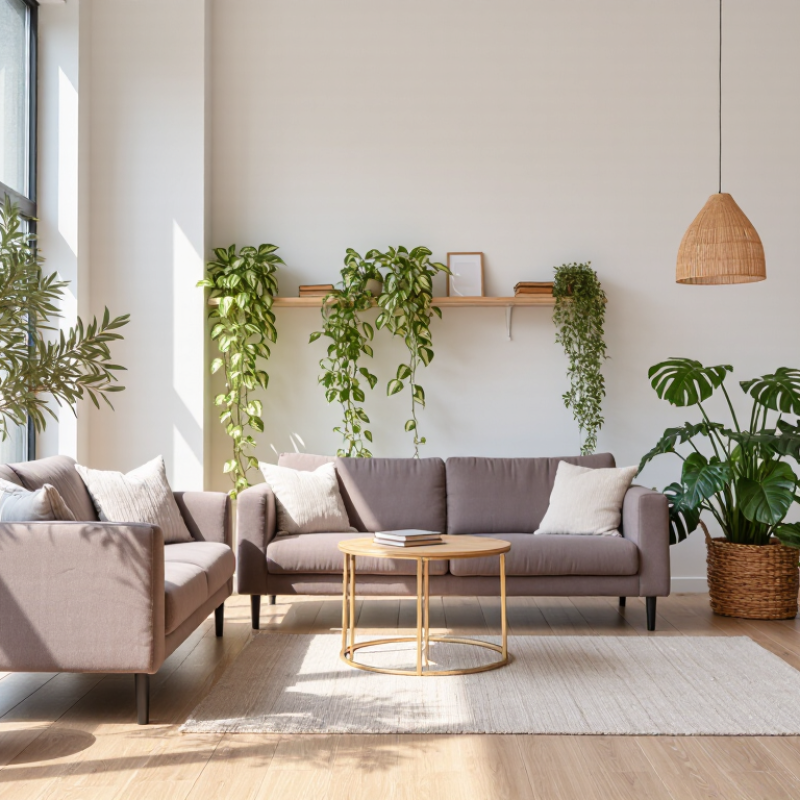
Big fake plants are engineered decorative plants made from materials such as polyester, polyethylene, wire, and molded plastic. Their purpose is to imitate mature indoor trees without watering, pruning, or seasonal replacement. A large artificial olive tree, for example, may include a steel-supported trunk, flexible branches, textured bark, and hundreds of individually shaped leaves.
Designers usually study real plants through photographs, botanical references, and physical samples. They vary leaf sizes, angles, and colors to avoid a flat appearance. The trunk may bend slightly, because perfect symmetry often looks artificial. Scale changes everything. A plant for a hotel lobby needs a heavier base and stronger internal structure than one for a private office. Weighted pots also improve stability near entrances or busy walkways.
Reliable manufacturers test colorfastness, material strength, and outdoor performance before production. However, “UV resistant” does not mean completely fade proof. Heat, sunlight, dust, and humidity still affect appearance over time. In my experience, realistic placement matters as much as construction. A tall plant looks more convincing when its leaves meet nearby furniture, windows, and ceiling height naturally. Some designs still appear too clean or repetitive, which is worth questioning before a large purchase. Small irregularities can make the display feel more botanical, but excessive variation may reduce visual balance.
Global buyers often choose large artificial plants because they create a clear visual anchor without demanding daily care. A tall tree beside a reception desk can soften hard surfaces and make an empty corner feel intentional. Scale matters. In hotels, offices, and showrooms, one substantial plant may also look more balanced than several small pots scattered around.
Maintenance is another practical reason. There is no watering schedule, soil to replace, or fallen leaf to clear after a busy day. For buyers managing multiple locations, consistent appearance can simplify routine upkeep. Still, “low maintenance” does not mean maintenance-free. Dust settles on broad leaves, and direct sunlight may fade some materials over time. A soft cloth and sensible placement help preserve the look.
Size brings trade-offs. Large plants need more floor space, careful packing, and secure positioning, especially in narrow corridors or high-traffic areas. Buyers should check the plant’s height, base dimensions, leaf spread, and material details before ordering. A canopy that looks generous in a product photo might overwhelm a small room. Not every oversized design feels convincing, either; overly uniform leaves can look artificial up close. A slightly imperfect finish may sometimes blend more naturally.
Large artificial plants suit modern spaces because they add visual height without needing sunlight, irrigation, or daily care. That matters in reception areas, windowless offices, and rental properties where moving heavy planters is difficult. The UN’s World Urbanization Prospects 2018 projects that 68% of the world’s population will live in urban areas by 2050, increasing demand for adaptable indoor environments. A tall faux tree can soften a hard corner or frame a seating area. No watering schedule required.
There is a useful caveat. The 2015 Human Spaces report surveyed 7,600 office workers across 16 countries and associated natural elements at work with higher reported wellbeing, creativity, and productivity. Those findings concern nature in the workplace, not artificial plants specifically. A synthetic leaf cannot clean air or provide the same sensory experience as a living plant. It can, however, offer a consistent green visual element where real greenery is impractical.
For busy spaces, that consistency has practical value. Leaves stay present through low-light seasons, and staff can clean them with a soft cloth instead of managing soil, fallen leaves, or watering spills. Check the plant’s scale against doorways and furniture; oversized foliage can make a compact room feel crowded. It is easy to overdo the greenery. Choose realistic shapes and restrained placement, then reassess the space after installation.
A practical benefit of artificial greenery is that it does not need watering. This chart compares annual watering events under a simple weekly-care schedule for a live indoor plant with the zero watering events required by an artificial plant.
The live-plant figure is based on one watering per week (52 per year); actual watering needs vary by plant species and growing conditions. Artificial plants may still need occasional dusting.
At home, big artificial plants can soften an empty corner without needing a sunny window. A tall faux olive tree beside a sofa adds height, while a broad-leaf plant can fill an unused entryway. Measure the space before choosing one; oversized leaves may crowd a narrow walkway. Check that the pot sits steadily on the floor, especially near children or pets. No watering needed. But dust still settles on the leaves, and a quick wipe keeps them from looking dull. Still, they can look too perfect. Mixing them with natural wood, woven baskets, or varied textures often makes a room feel less staged.
Businesses use large artificial plants to bring visual warmth to places where live greenery may be hard to maintain. A pair near a reception desk can frame the entrance, while one tall plant can break up a bare office wall. In cafés and shops, plants can help define seating areas without blocking customers’ sightlines. Keep them clear of doors and busy routes. In practice, placement matters more than quantity; too many can make a small space feel cramped. Results also depend on leaf detail and finish. Some plants appear convincing from across a room but look noticeably artificial up close, so inspect the materials and shape before buying.
Before choosing big fake plants, buyers should examine the product, not only its photographs. Grand View Research estimated the global artificial plants market at about USD 1.8 billion in 2023. It also projects steady growth through 2030. This demand hides quality differences. A tall plant with thin leaves may look acceptable online, but weak stems can bend during shipping. Measure twice. Check the plant’s height, pot width, base weight, and packed dimensions. Doorways and elevators often become unexpected problems.
Material choice affects appearance, safety, and maintenance. Look for UV-resistant leaves when the plant will stand near windows or in covered outdoor areas. Ask suppliers for test information rather than trusting the phrase “fade resistant.” For indoor projects, buyers should request material and fire-performance documentation where local building rules require it. SGS industry testing guidance and international flammability standards can help clarify what has actually been tested. The details matter.
Cleaning is another practical concern. Dust settles quickly on large leaves, especially in hotel lobbies and retail spaces. Select surfaces that can tolerate gentle wiping without losing color. Review the pot’s stability, drainage design, and filling material. Some lightweight bases tip easily in busy corridors. Freedonia’s 2023 analysis of decorative products highlights durability and replacement costs as important purchasing considerations. Yet reports cannot predict every site condition. I have seen attractive samples fail when their foliage was too dense for routine cleaning. Ask for close-up images, sample pieces, packaging photos, and a written replacement policy before approving a large order.
They usually use polyester, polyethylene, molded plastic, wire, and steel supports. A sturdy trunk helps large branches hold their shape.
Designers study photographs, botanical samples, and real plant structures. They vary leaf sizes, angles, colors, and branch directions. A slightly bent trunk often looks more natural than perfect symmetry.
They need no watering, pruning, soil replacement, or seasonal changes. However, dust gathers on broad leaves. Wipe them with a soft cloth. They are not completely maintenance-free.
Direct sunlight, heat, humidity, and dust can change its appearance. UV-resistant materials may fade less, but they are not fade-proof. Placement still matters.
Place a tall plant beside a sofa, near an entryway, or in an empty corner. Measure narrow walkways carefully. Large leaves can crowd the passage. Natural wood and woven textures may reduce a staged appearance.
Offices, hotels, cafés, and shops use them to soften bare walls and hard surfaces. A pair can frame a reception area. One tall plant can define a seating zone without blocking views.
Check height, pot width, leaf spread, trunk structure, materials, and total weight. Compare these measurements with the room. Product photos can make a canopy look smaller than it feels.
Choose a weighted pot or a reinforced base for busy areas. Place it away from doors, narrow routes, children, and pets. A beautiful plant is not useful if it tips easily.
No. Some look convincing across a room but show repetitive leaves nearby. Small irregularities can improve realism. Too much variation may disturb visual balance. This is worth reconsidering before a large purchase.
Big Fake Plants are large artificial trees and greenery designed to create a natural focal point without the upkeep of living plants. With carefully shaped leaves, realistic colors, and sturdy forms, they can bring visual warmth to a space throughout the year. Global buyers often choose them because they need no watering, sunlight, or pruning, making them a practical option for busy households and commercial settings.
In homes, offices, hotels, and retail spaces, Big Fake Plants can soften empty corners, define areas, and add a sense of freshness. Their durability and flexible placement make them suitable for many interior styles and spaces where live plants may be difficult to maintain. Before choosing one, buyers should consider its height, shape, materials, finish, available space, and how closely its appearance matches the surrounding decor.

Senmao garden